
Blog

My First Camera, 35 Years Later

I’ve been a professional photographer for more than two decades now. But before any of that, before the Navy, before WIRED, before NASA, before I knew what aperture or shutter speed meant, there was this camera.

A bright green Teenage Mutant Ninja Turtles point-and-shoot from 1990.

A gift from my uncle when I was about 5 years old.

It was the first camera I ever owned. It’s also the worst camera I own: plastic lens, fixed focus, no meaningful exposure control, and a tiny Michelangelo photo bomb stamped into every frame.

So…I took it to New York to see if I could make a good photograph with it.
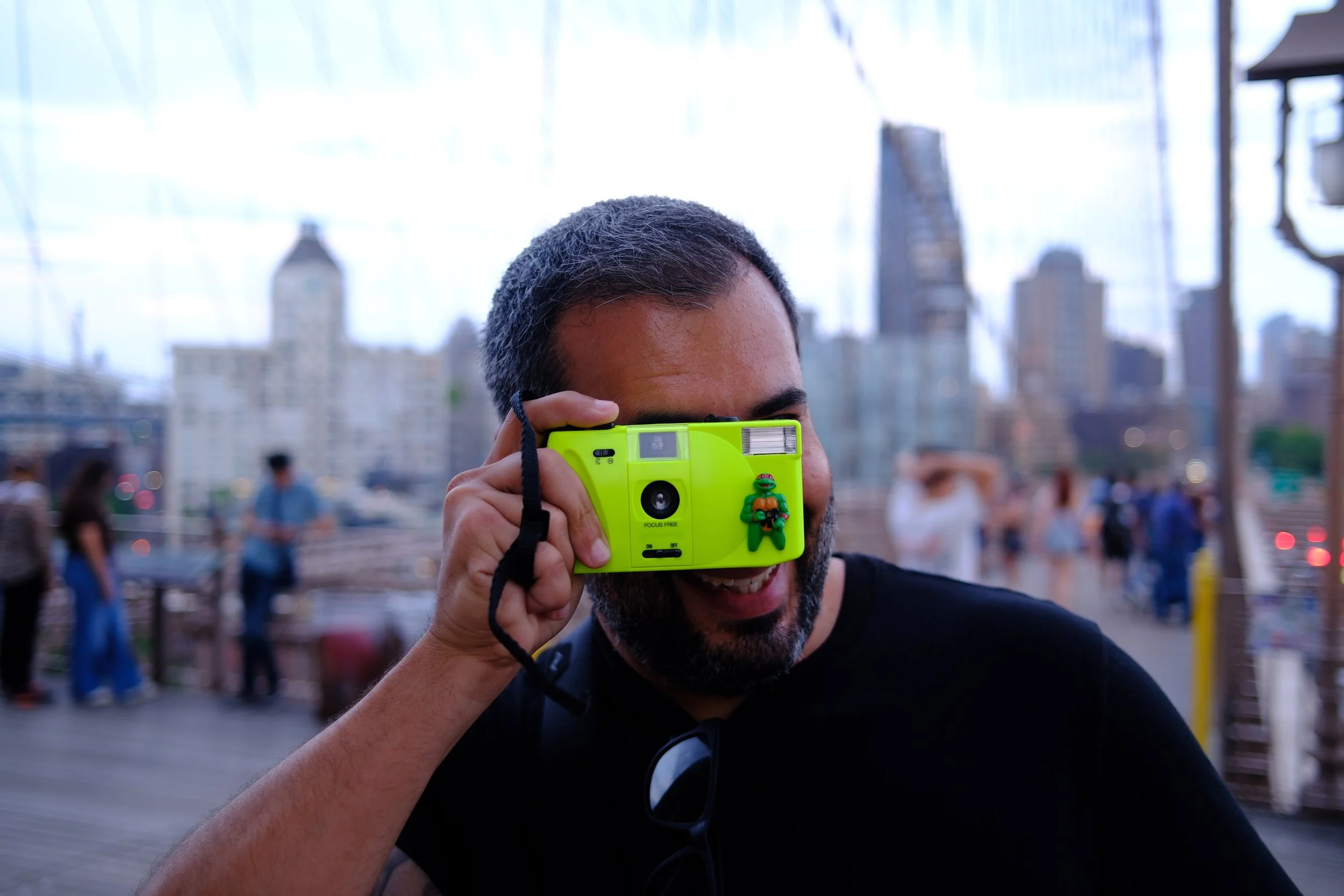
At first, I thought the project was going to be a fun camera test. A professional photographer revisiting his childhood camera and trying to make something decent with it.

But the more I worked on it, the less it felt like a test.

The limitations forced me to stop thinking so much. I could only choose where to stand, what to point it at, and when to press the shutter.

Which, as it turns out, is still most of photography.

In the end, the project became less about whether the camera could make a good photograph, and more about why some photographs are worth keeping at all.
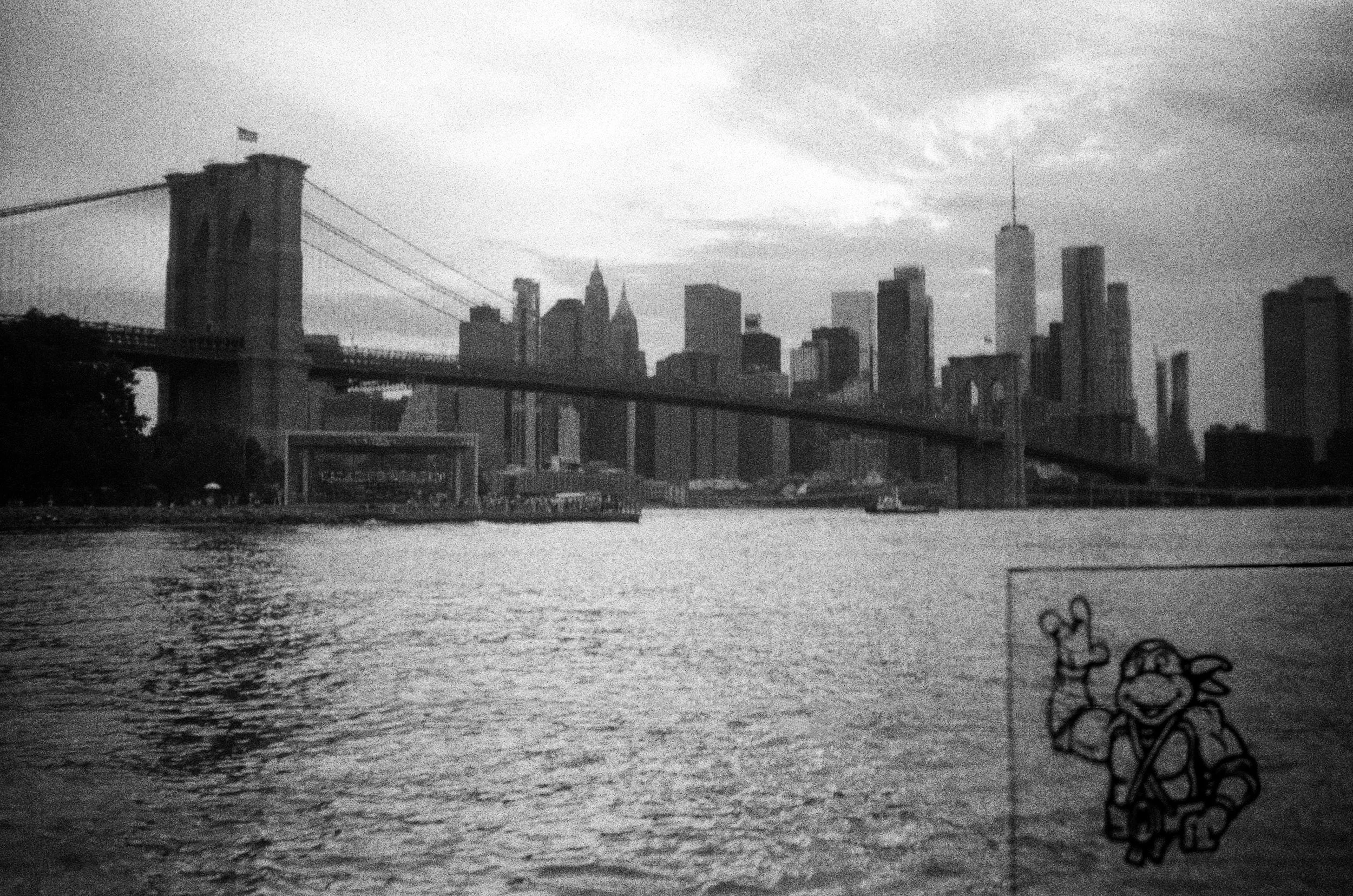
Thanks to Warren Harold, Luna Posadas Nava, Dane Turner, Heidi Lavelle, Daniel Tohill, Bill Stafford, and of course Chris Gibbons for helping bring this to life.
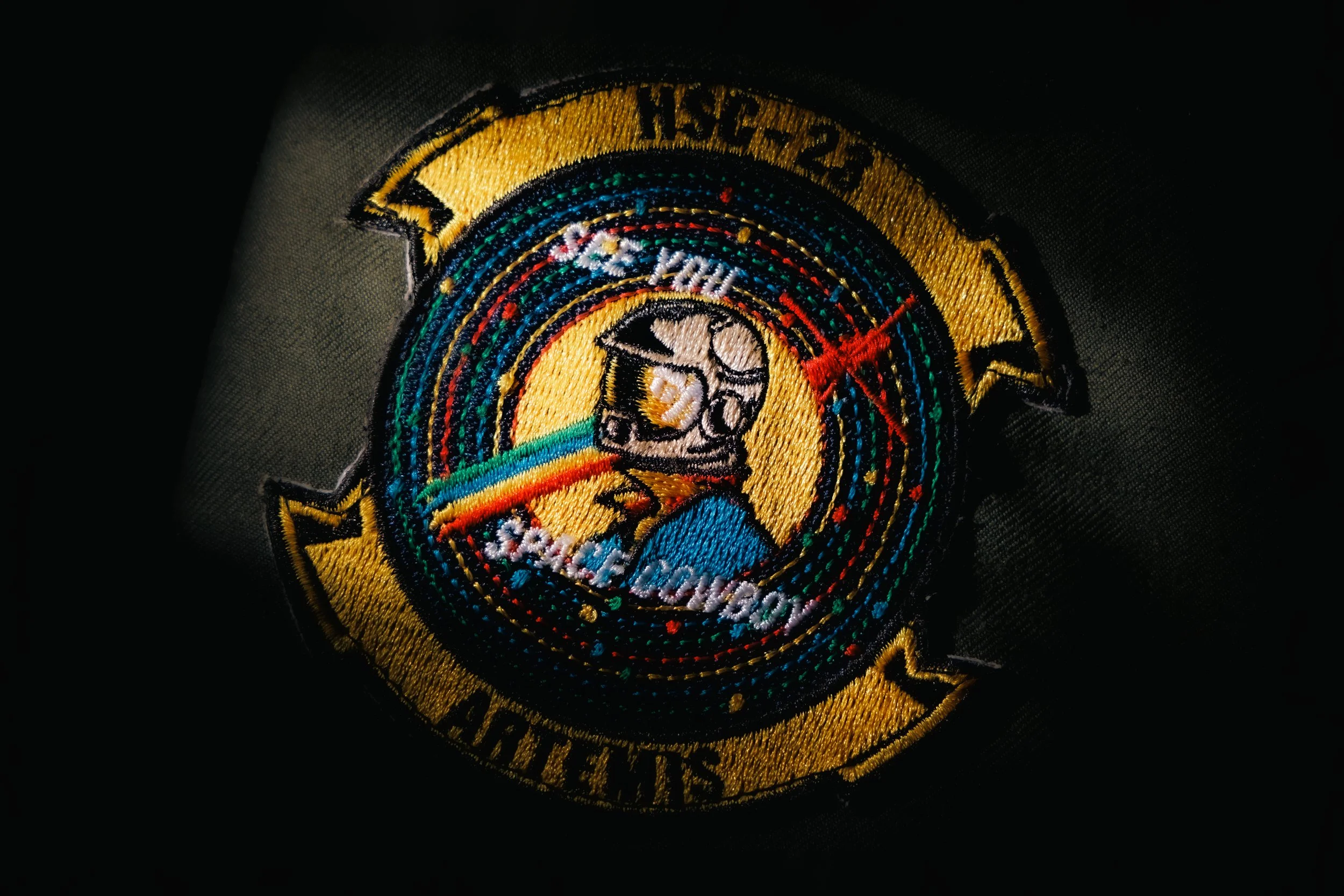
Thank You, NASA

Today is my last day at NASA.

NASA was never just a place to work. It was a chance to serve a mission so ambitious, challenging, and hopeful that people around the world look to it with wonder.

What a gift it has been to spend nine years helping tell that story.

I’m deeply grateful for the people who trusted me, the moments I was allowed to witness, and the work that shaped me along the way.

Thank you, NASA.

TEDxCMU

From the thrill of photographing NASA’s Artemis missions to the challenge of distilling those moments into a story for the TED stage, my journey has been defined by both faith in the process and in those around me.

I’m immensely grateful for the support from friends, family, and co-workers who stood by me through this whirlwind of panic, preparation, and profound moments.

Thank you to the entire TEDxCMU team for this wonderful opportunity!

Space Robotics

Mastering the art of space robotics, NASA astronaut Loral O’Hara practices flying the Canadarm from the mock-up cupola in the Systems Engineering Simulator at NASA’s Johnson Space Center, providing a glimpse into the intense training and preparation for missions aboard the International Space Station.

Photo: NASA/Josh Valcarcel (jsc2022e078437_alt)

Space Hair

I had a shot like this in mind for a while (upside-down is a completely legitimate orientation for an astronaut!) but knew I couldn’t ask one of the crew to actually hang upside-down in the photo studio.

Instead, I asked NASA Astronaut Loral O’Hara to do a hair flip (an excellent suggestion by @norahmoranphoto), and then rotated the image in Photoshop to solicit a similar effect. Props to Loral for managing to render such a solid smile mid-action.

Photo: NASA/Josh Valcarcel (jsc2022e041196_alt)

Silver Surfer

Photo by NASA Astronaut Chris Cassidy, taken from aboard the International Space Station.

There’s a long story that goes with this photo that I’ll do my best to tell quickly.

When my girlfriend and I first met, I was obsessed with space and astronauts (and have been since college). Together, we created a spacesuit that ended up winning the WIRED Halloween costume contest. We spent more than a month working on it.

Not long after, she gave me a really cool pin of a surfing astronaut, and it sort of commemorated the whole experience. I liked it so much that I wore it on my photo jacket, and it became a permanent part of my attire.

Over the next few years, several twists of fate brought me to NASA as a photographer, and I got to be around real astronauts and real space suits. Their official portraits quickly became my favorite thing to shoot, and while I was photographing Chris Cassidy, he just happened to bust out a surfer pose. Several months later, I thought about how uncannily similar Chris’ photo and that pin were, so I told him this story and gave it to him. Not only did he end up bringing it to space, he photographed it “surfing” in the cupola of the space station, and when he returned, he was kind enough to give it back to me.

When we made that costume, I was just enjoying the process: looking at photos of spacesuits for inspiration, visiting scrap stores, and spending time with my girlfriend. I was just having fun. It’s unbelievable to me that this somehow lead to something actually going to space. That pin is a real astronaut now, and Heidi and I are still very much in love (along with our two dog children).

I’m beyond grateful to Chris (Go Navy!) for his generosity. To me, this is more than amazing – it’s further proof that life is inherently mysterious, wonderful, and worth exploring.

NASA Astronaut Mike Finke

Suit techs adjust NASA astronaut Mike Fincke’s visor as he’s prepped for an official portrait in his “Boeing Blue” spacesuit. Photo: NASA/Josh Valcarcel (jsc2019e028582_alt )

Suit techs adjust NASA astronaut Mike Fincke’s visor as he’s prepped for an official portrait in his “Boeing Blue” spacesuit. Photo: NASA/Josh Valcarcel (jsc2019e028582_alt )

First Man

While reading the news this morning I came across a Pop Sci article featuring one of my photos from Ryan Gosling’s tour of NASA’s Johnson Space Center last year – part of the filmmakers’ extensive research prior to the filming of First Man. I went to an early screening a few weeks ago and the immersive style of cinematography and sound design made me feel like I was there in first-person.

Photo: NASA/Josh Valcarcel

Learning to Spacewalk

Canadian Space Agency astronaut Jeremy Hansen is suspended over a mock-up of the International Space Station during a microgravity simulation in the Active Response Gravity Offload System (ARGOS) at NASA’s Johnson Space Center. The training was conducted in both light & darkness to mimic the 90 minute day-night cycle they experience in orbit.

Photo: NASA/Josh Valcarcel (jsc2017e127993)